


In depth · BI strategy & data sovereignty
Leaving SAP BusinessObjects for Power BI, Tableau or DigDash? The real urgency is not to rush
The temptation is real: drop SAP BO, dismissed as “legacy”, for a platform seen as more modern. But behind that intention lies a two-to-three-year project, a widely underestimated cost and a risky technology bet — at the very moment artificial intelligence is redefining the whole of BI.
Here are five data-backed reasons to modernize your existing stack rather than rebuild everything elsewhere.
1. SAP is not abandoning BusinessObjects — the roadmap proves it
The leading argument for migration is that SAP BO is “end of life”. That’s inaccurate. SAP has published a clear roadmap for the decade: after BI 4.3, it released BI 2025 (available on-premise) and confirmed BI 2027 and then BI 2029, with a new strategy offering three years of support per version and maintenance guaranteed until at least 2031. In other words: there is no urgency to flee a platform whose future is secured.
SAP BusinessObjects roadmap
Sources: SAP Statement of Direction (Oct. 2025); SAPinsider; NTT DATA Business Solutions.
2. The real cost and risk of a migration
The price of new licenses is only the tip of the iceberg. A BI migration means rebuilding the semantic layer (your universes), rewriting hundreds — sometimes thousands — of reports, rethinking your datamarts, running a costly dual run, and retraining both IT and business teams. And the statistics are unforgiving.
What the data says about data migrations
Sources: Gartner (failure rate); The Bloor Group (average cost/time overruns).
On top of this come the hidden costs rarely quantified up front: the “comprehension” work of documenting what each report actually does — knowledge often locked in a single person’s head; the dual run that doubles licensing and infrastructure for one to three months; and the rebuilding of data transformations embedded in the reporting layer. All told, it’s a multi-year effort that ties up your best people on reconstruction rather than value creation.
3. Migrating today means aiming at a moving target
This is the most underestimated argument. The BI market is undergoing an accelerated transformation: generative AI, natural-language querying, agentic analytics. Gartner expects 75% of new analytics content to rely on GenAI as early as 2027, and the augmented analytics market is projected to grow nearly sixfold by 2032.
Global augmented analytics market ($bn)
Source: Fortune Business Insights ($15.26bn in 2025 → $87.03bn in 2032).
Committing to a two-to-three-year project to join a platform whose usage, pricing and roadmap shift every six months means risking having to re-migrate before the first migration has even paid off. Until the landscape stabilizes, locking your teams onto an uncertain target is a gamble, not a strategy.
4. Cloud and sovereignty: the question we’d rather avoid
Most alternatives to SAP BO push toward the cloud, often hosted outside Europe. Yet according to the European Commission, more than 70% of European companies’ data already sits on extra-European infrastructure (mainly American). This dependency exposes them to extraterritorial laws such as the US CLOUD Act (2018), which lets foreign authorities access data stored outside their territory — a direct friction point with the GDPR and the European Data Act, applicable since September 2025.
In a context where digital sovereignty is once again a matter of national security, keeping an on-premise platform isn’t falling behind — it’s a strategic asset.
An on-premise SAP BusinessObjects platform leaves you in full control of both your data location and your costs — whereas per-user, subscription-based cloud models see costs spiral as usage scales, with reversibility that often remains theoretical.
5. AI doesn’t force you to migrate — it plugs into what you have
This is the heart of the matter. If the goal is to modernize the analytics experience and embed AI, you no longer need to leave SAP BO. Modernization can happen on top of your current stack, without touching your universes or your data. That is precisely Need4Viz’s reason for being: to simplify the lives of SAP BusinessObjects users, augment the capabilities of Web Intelligence, and facilitate the creation and distribution of dynamic reports. In practice, the N4V FOR WEBI suite is built around four modules:
N4V Intelligence
Natural-language querying directly on your existing universes: building queries and variables, AI within your own perimeter, without exposing data to a third party.
N4V Widgets
More than 60 modern, interactive visualizations, right inside Web Intelligence.
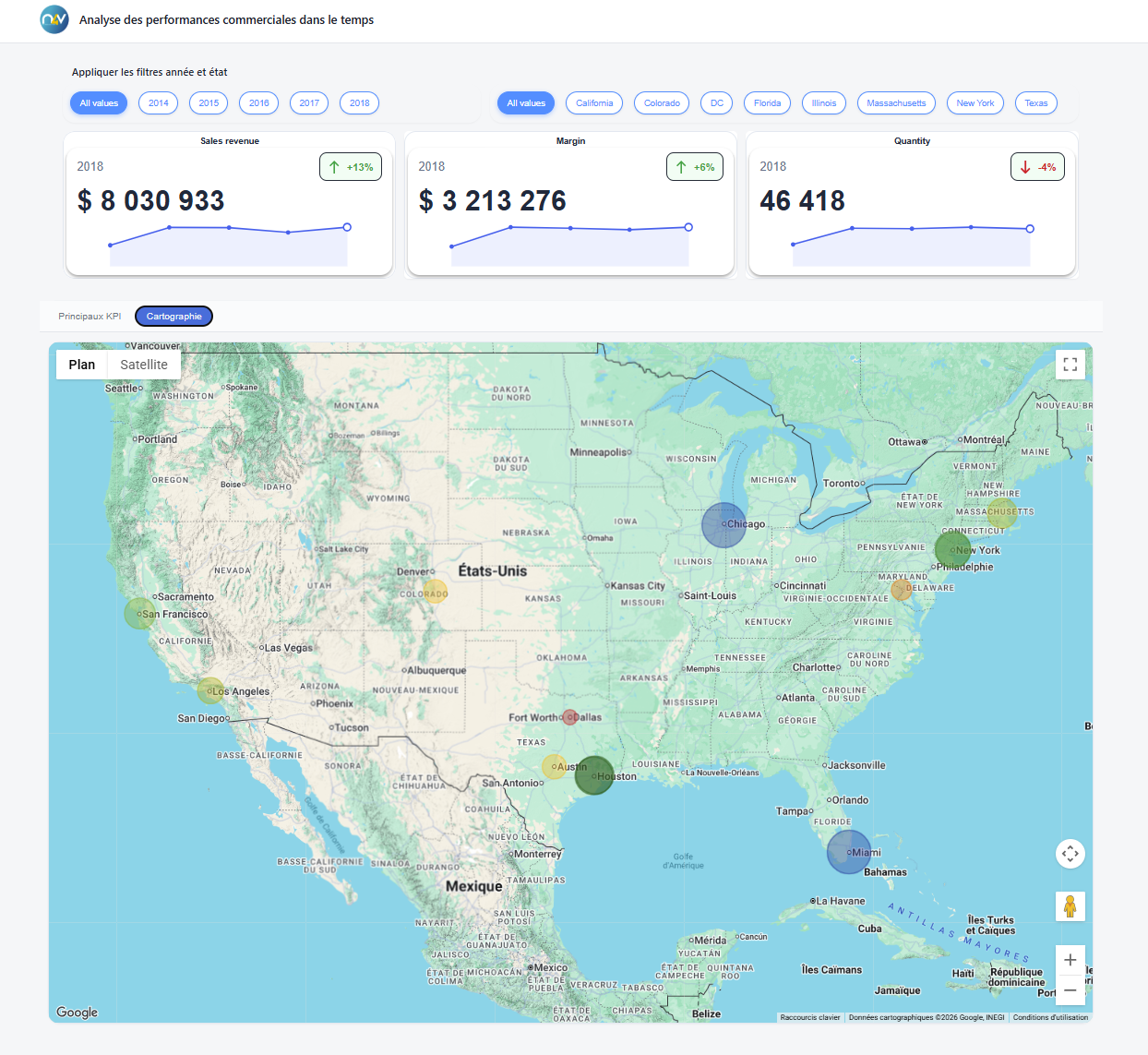
N4V Maps
Mapping and geographic analysis built into your reports.
N4V Publisher
HTML5 export and sharing of your dashboards, with no additional SAP license.
The result: a modern experience, native AI, time-to-value in a matter of weeks — and zero migration.
Leave SAP BO or modernize what you have? The comparison
| Criterion | Migrate to Power BI / Tableau / DigDash | Modernize SAP BO |
|---|---|---|
| Timeline | 2 to 3 years | A few weeks |
| Total cost | High (+30% on average vs. budget) | Controlled, incremental |
| Project risk | 83% fail or overrun | Low — you build on existing assets |
| Sovereignty | Often cloud, sometimes outside the EU | On-premise, full control |
| Existing assets | Destroyed then rebuilt | Preserved and enhanced |
| Access to AI | Yes, after migration | Yes, immediately (natural language) |
| Vendor longevity | Moving target (AI, pricing) | SAP roadmap guaranteed to 2031+ |
Active patience is not standing still
Not rushing doesn’t mean doing nothing — quite the opposite. It means: building on a robust, controlled platform supported through 2031 and beyond; embedding AI and modern data visualization today; and watching a market that will stabilize before committing, if needed, to structural decisions made with full visibility.
The real urgency in 2026 is not to leave SAP BO. It’s to avoid burning two to three years of budget and energy on a technology bet — when modernization is already within reach, right on your current stack.
What if you tried modernization, without migration?
See how the N4V FOR WEBI suite adds AI, interactive data visualization and HTML5 export to your existing SAP BusinessObjects environment.
Frequently asked questions
Is SAP BusinessObjects end of life?
No. SAP has published a clear roadmap: after BI 2025, the BI 2027 and BI 2029 releases are confirmed, with maintenance guaranteed until at least 2031. The platform therefore has a secured future for the decade.
How long and how much does a migration to Power BI, Tableau or DigDash take?
A full BI migration is generally a two-to-three-year project. According to Gartner, 83% of data migration projects fail or exceed their budget and timelines, with average overruns of 30% on cost and 41% on time (The Bloor Group), not counting hidden costs such as the dual run.
Can you add AI to SAP BO without migrating?
Yes. The N4V FOR WEBI suite adds AI on top of your existing environment. N4V Intelligence enables natural-language querying and the creation of queries and variables directly on your universes, without touching your data or your semantic layer.
Is data sovereignty a reason to stay on SAP BO?
Yes. More than 70% of European companies’ data is hosted on extra-European infrastructure, exposing it to laws such as the US CLOUD Act. An on-premise SAP BO platform guarantees control over data location, in line with the GDPR and the European Data Act.
What is the N4V FOR WEBI suite?
It’s a suite of four modules that extend SAP Web Intelligence: N4V Widgets (60+ interactive visualizations), N4V Maps (mapping), N4V Publisher (HTML5 export with no additional SAP license) and N4V Intelligence (AI and natural language).
Sources
- SAP — Statement of Direction, BusinessObjects (Oct. 2025); SAPinsider, “SAP BusinessObjects 4.2: End of Support and What’s Next”; NTT DATA Business Solutions, BI 4.3 end of life.
- Gartner — data migration project failure rate (83%), as cited by Integrate.io, Domo and Kanerika.
- The Bloor Group — average cost (+30%) and time (+41%) overruns, as cited by Oracle / Integrate.io.
- Gartner — “75% of analytics content to use GenAI by 2027” (press release, June 2025); Hype Cycle for Analytics and BI 2025.
- Fortune Business Insights — augmented analytics market ($15.26bn in 2025 → $87.03bn in 2032).
- European Commission — >70% of European companies’ data hosted outside Europe; US CLOUD Act (2018); EU Data Act (applicable Sept. 2025); GDPR.
👉 Discover Need4Viz and what we really bring to SAP Web Intelligence
Need4Viz extends SAP Web Intelligence with advanced dataviz, interactivity, automation and AI capabilities to transform your reports into real decision-making tools.
Discover Need4Viz