


What SAP can learn from Volkswagen
In the mid 2000’s, Volkswagen came to a startling conclusion. It was successful with young, female buyers- especially the ones buying their first new vehicle after college graduation. Models like the New Beetle, Golf, and Jetta had great appeal for this demographic. Unfortunately, when it came time to choose a replacement vehicle, these first-time buyers were leaving the brand. The reason? These buyers were no longer new college graduates, but wives and mothers looking for a vehicle appropriate for the entire family.
Unfortunately, VW did not have a suitable vehicle in its US lineup and its customers were leaving the brand to purchase SUVs and minivans. While VW sold similar vehicles in Europe, they were considered too small or too expensive to import to America. And the development of a new vehicle was cost prohibitive. So, VW came up with a creative solution – it chose to work with Chrysler to rebadge its successful Grand Caravan minivan. In 2008, the Volkswagen Routan made its first appearance at the Chicago Auto Show.
The Routan was made in Windsor, Ontario on the same assembly line as Chrysler’s own vehicles. To keep development costs low, it was made by raiding the Chrysler parts bin, including the engine and drivetrain. Cosmetically, VW created a modified front and back end, a revised instrument panel with their signature red lights, and a VW logo on an obviously Chrysler, not VW, key fob. The only thing truly “Volkswagen” about the Routan was its “European-tuned suspension,” which was so European that Chrysler decided to export its vans to Europe with Volkswagen’s modifications.
Our family purchased a 2012 Volkwagen Routan and can attest to the beauty of the European-tuned suspension. We replaced the Routan with a 2018 Dodge Grand Caravan, and it just isn’t the same.
The Volkswagen Routan was not the sales success that Volkswagen hoped for and it was discontinued in 2013. Aside from pricing issues when compared to Chrysler’s own lineup, American women were turned off being branded as “minivan soccer moms” and opted to purchase larger and less fuel-efficient crossovers and sport utility vehicles (SUV). But another key factor was that Chrysler kept their competitive advantage, their second-row Stow’n Go and Swivel’n Go seating- to themselves.
Volkswagen has since adjusted their strategy for the North American market. In July 2008, they announced plans for a domestic plant in Chattanooga, Tennessee, which opened in 2011. Its first vehicle was a larger version of its European Passat, which was sold from 2012 through 2021. Adapting to the changing taste of Americans, the Chattanooga plant began production of the Volkswagen Atlas SUV in 2017 and the electric ID4 in 2022.
So, what can SAP learn from Volkswagen?
Around the same time period, SAP was losing ground to a competitor. SAP transitioned its BusinessObjects platform from a desktop to a browser experience, only to be frustrated by a competitor that used its desktop installation as part of its “land and expand” strategy of conquering corporate cubicles one at a time. So SAP countered with a product named SAP Visual Intelligence (later rebranded as Lumira) in 2012 – oddly enough the same year our family purchased our Volkswagen Routan. Imagine if SAP had borrowed from VW and rebranded their competitors’ desktop product with a shiny SAP splash screen? SAP Lumira wasn’t the success that SAP had hoped for, and support is largely phased out in its forthcoming SAP BusinessObjects BI 2025 release.
Just as Volkswagen recognized the customer shift from sedans (the Passat) to SUVs (the Atlas), SAP recognized that customers were shifting from on-premise software to the cloud. SAP Analytics Cloud was first introduced in November 2015 under the name SAP Cloud for Analytics. It was briefly renamed to SAP BusinessObjects Cloud in 2016 and finally to SAP Analytics Cloud in 2017.
From its launch, SAP has always positioned SAP Analytics Cloud as the successor to SAP BusinessObjects. However, ten years of history have demonstrated that it is not. A casual glance at job posting reveals that customers are leaving the SAP brand for alternatives largely from Microsoft and SalesForce. After several damaging years where SAP BusinessObjects had no clear roadmap, SAP reluctantly announced in 2022 that the SAP BusinessObjects platform would continue with what was first called BI 2024 and later updated to BI 2025 to reflect its delayed release date.
And what customers get on March 12 is truly amazing. Instead of “European tuned suspension” we are getting a thoroughly modern user experience and innovative features like data preparation via a new Data Mode. But what we are not getting is equally important – the equivalent of Chrysler’s Stow-and-Go seating, or artificial intelligence (AI).
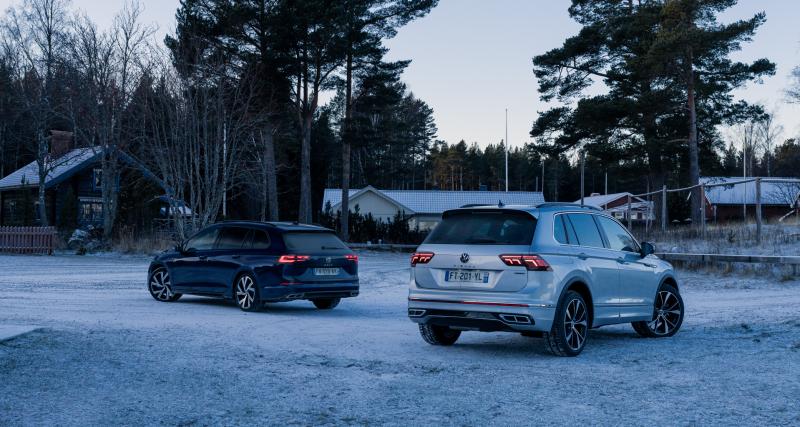
It should be fashionable to admit in 2025 without guilt that SAP Analytics Cloud and SAP BusinessObjects appeal to different customers, just like a VW Golf appeals to a different buyer than a Tiguan. However, while many SAP BusinessObjects customers will soldier on with BI 2025 and BI 2027, others are leaving the SAP brand. It’s time to for SAP to focus on keeping users in the SAP brand instead of convincing the world that SAP Analytics Cloud is the solution for every analytics need. SAP Analytics Cloud and SAP BusinessObjects are like two siblings that sometimes squabble. But a good parent will love both of their children without preferring one over the other. It’s time to see SAP promise some real innovation for BI 2027, with no feature off the table.
